
Articles
Being a Programmer in the Age of AI: Beyond Copy-Paste
Do you think that by using AI you can be a good programmer? I am sorry to inform you that no because AI is a tool and it requires a lot that you are a good developer.
Read the article in the app. Download Be Native now.


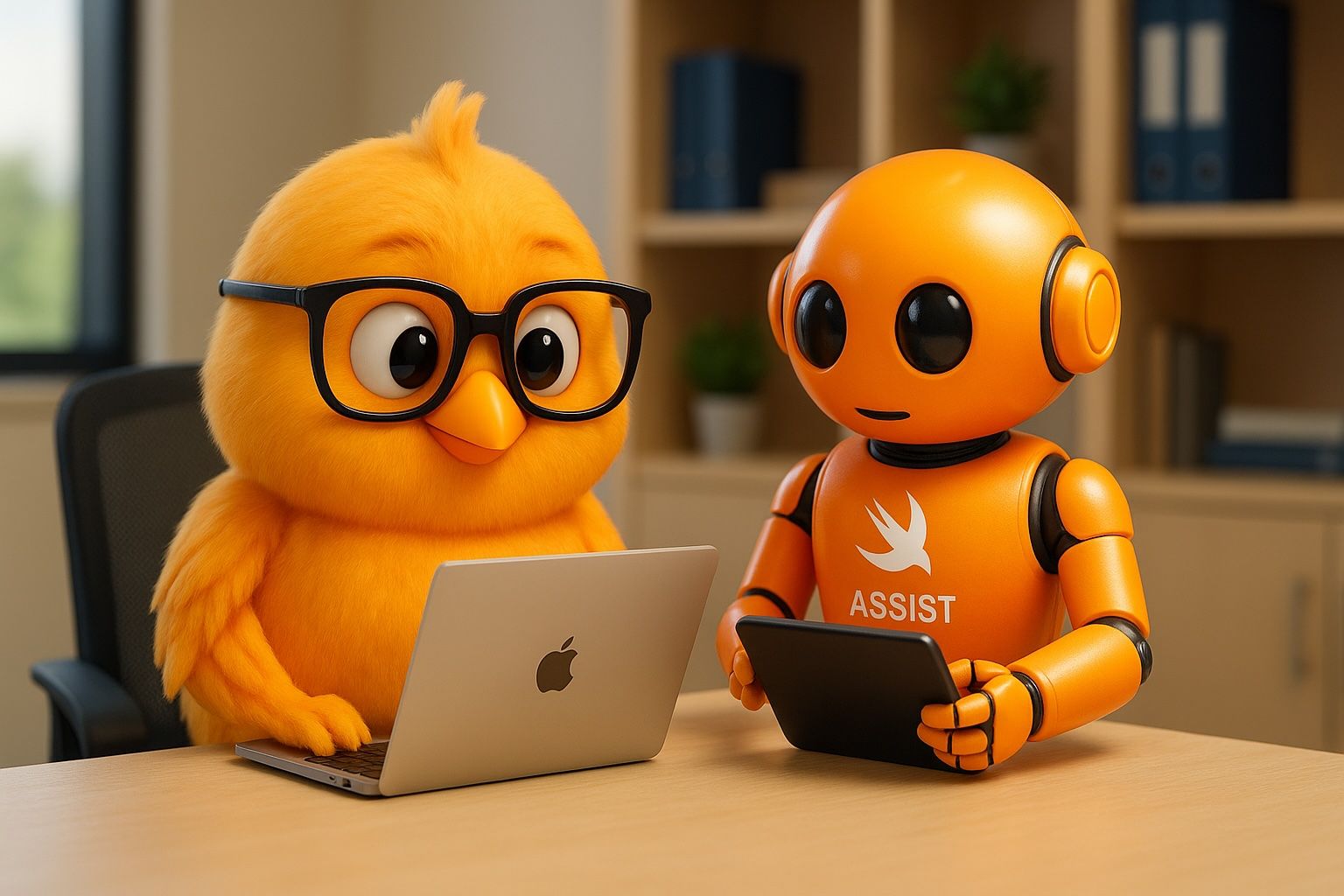
🤯 The other day, while recording the latest episode of Caffè Swift with my colleague Arturo Rivas, a conversation came up that has been haunting me ever since. It all started talking about "vibe coding" and drifted towards an undeniable reality: artificial intelligence is irreversibly transforming our profession.
👨🏻💻 But let's be clear: watching a video of how to assemble a faucet on YouTube does not make you a plumber. In the same way, copying and pasting code from ChatGPT without understanding what it does doesn't make you a programmer. The difference is crucial and defines the future of our industry.
The shortcut illusion
Yes, you can make an entire app by copying and pasting AI-generated code. It may even work on the fly. But ask yourself:
- Who maintains that code when something goes wrong?
- How do you scale when the project grows?
- How do you identify and fix bugs in code you don't understand?
- What happens when you need to integrate systems that the AI doesn't know about?
It's like building a house without understanding the principles of architecture. It may stand up today, but what happens when it rains or the wind blows?
The real professional change
AI has not come to replace us, but to transform how we work. The change is not in whether or not we use AI, but in how we use it:
- The programmer-maker: Copy, paste and pray it works.
- The programmer-professional: Uses AI as a tool, understands the output, adapts it and improves it.
This difference will determine who survives professionally in the coming years. It is not a matter of resisting change, but of adapting correctly.
Natural language vs. programming language
We are evolving to a time where knowledge of a specific language or framework will be less relevant than the ability to effectively communicate with AI using natural language.
But - and this is crucial - you will need more than ever to understand the fundamentals of programming:
- Algorithms and data structures
- Design patterns and architectures
- Scalability and performance principles
- Division of problems into manageable tasks
- Logical thinking and problem solving
Without these foundations, you will be limited to being an intermediary between AI and code, without providing real value.
The augmented programmer
The best programmers of the future will not be those who memorize APIs or syntax, but those who:
1. Deeply understand the problems to be solved
2. Know how to communicate these problems clearly to the AI
3. Critically evaluate the solutions generated
4. Integrate and adapt the code in a coherent way.
5. Debug and optimize when necessary
In essence, AI will amplify the capabilities of true programmers while exposing the limitations of those who only knew how to copy and paste.
The paradox of abstraction
Interestingly, as code becomes more accessible through AI, the need to understand the fundamentals becomes more important, not less.
It's like the difference between driving a car with an automatic transmission and understanding how the engine actually works. When everything goes right, everyone can drive. But when something goes wrong, only those who understand the system can diagnose and fix the problem.
The safe bet
Whether you're just starting out in programming or have been at it for years, my advice is clear: learn the fundamentals. Understand how the code you write or generate works. Know the "why" behind the "how".
AI is an extraordinary tool that will allow you to be more productive and creative, but only if you have the foundation to use it properly.
And remember: there are no real shortcuts to mastery. The only way to become a true professional is to deeply understand your craft. AI changes the tools, not this fundamental truth.
What do you think: are you using AI as a crutch or as an enhancer? The difference will determine your relevance in the coming years.